
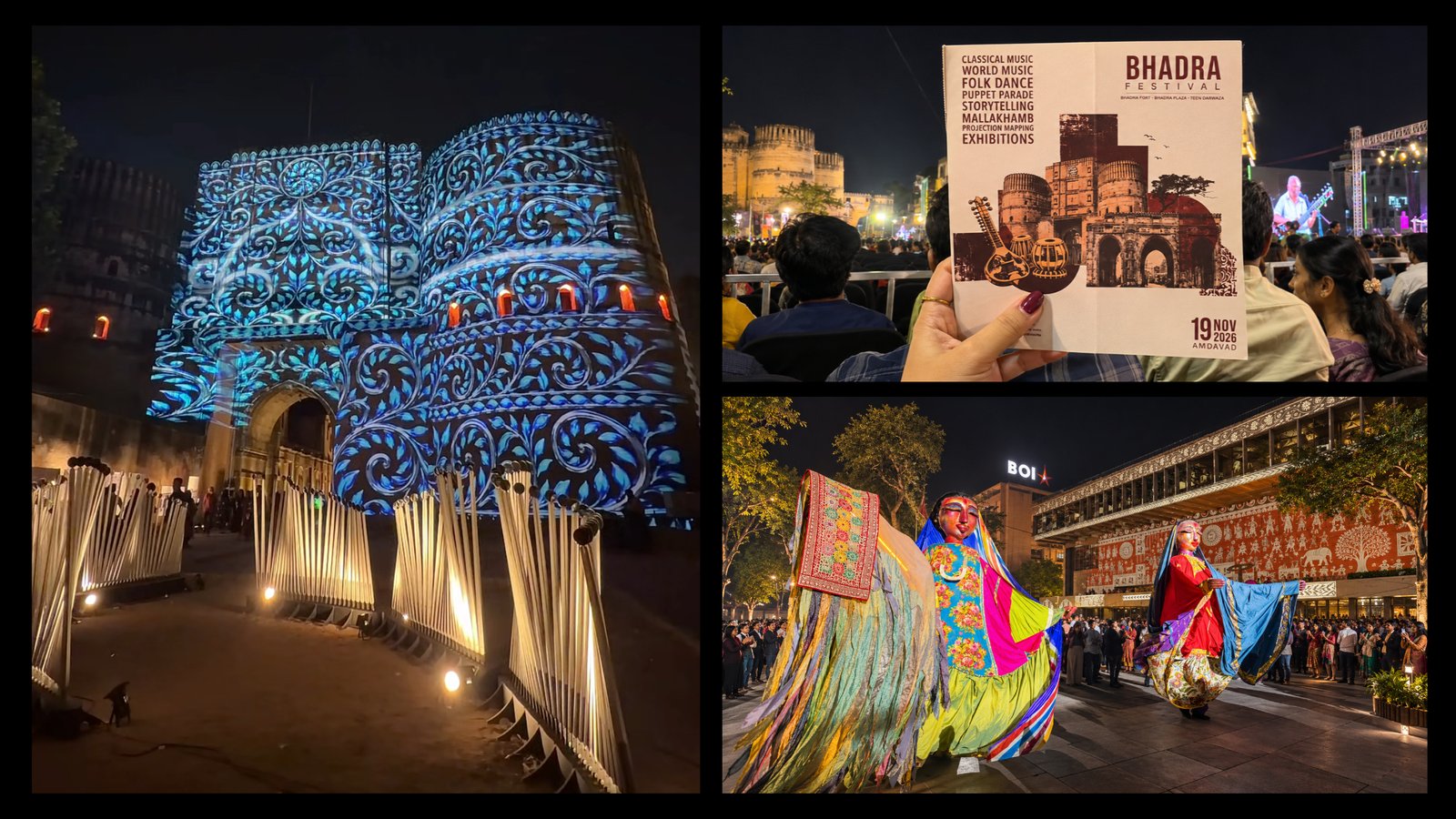
For most Amdavadis, Bhadra, Lal Darwaza and Teen Darwaza are familiar landmarks associated with bustling markets, street shopping and the everyday rhythm of the old city. But beyond the crowds and commercial activity, these historic spaces hold stories that are deeply woven into Ahmedabad’s cultural identity.
Bhadra Festival 2026 offered a different way to experience this part of the city. Bringing together art, music, theatre and traditional performances, the festival transformed familiar heritage locations into spaces of cultural discovery, allowing visitors to see Ahmedabad beyond its everyday landscape.
From a giant puppet parade by Dadi Pudumjee’s Ishara Puppet Theatre and Mallakhamb to Sidi Dhamal, Gujarati storytelling, Natya Sangeet and Mata Ni Pachedi-inspired presentations, the celebration brought India’s diverse artistic traditions into the heart of the old city.
More than a cultural gathering, it became an invitation for Amdavadis to rediscover the heritage that surrounds them.
Seeing the Old City Through a Different Lens
Ahmedabad’s historic neighbourhoods are often experienced through routine. People visit the markets, cross familiar streets and pass centuries-old structures without necessarily exploring the stories behind them. Bhadra Festival created an opportunity to change that experience by bringing cultural activities into spaces that are otherwise part of everyday movement.
For Sakshi Shah (Mind That Cheeese) and Anam Pathan (Foodartic), attending the festival meant discovering a side of Ahmedabad she had never experienced despite being familiar with the area.
“we’ve passed through Bhadra, Lal Darwaza and Teen Darwaza so many times, but I never really got a chance to see what’s inside Bhadra Fort. So seeing it for the first time, filled with music, art, performances and projection mapping, was quite something. It actually made me feel more connected to my city and made me realise how much beauty Ahmedabad has to offer,” she shared.
Their experience reflects something interesting about living in a heritage city: familiarity does not always translate into discovery. Sometimes, it takes a different experience to appreciate the places that have always been around us.
When Ahmedabad’s Cultural Roots Take Centre Stage
The festival brought together artistic traditions that represent different aspects of India’s cultural landscape. The giant puppet parade, Mata Ni Pachedi presentation at Premabhai Hall and musical performances featuring sitar and tabla offered audiences an opportunity to engage with art forms that deserve greater visibility.
For them, the way these performances were brought together made the experience stand out.
“The way they presented everything was quite different and made the experience special.”
Such cultural showcases play an important role in keeping traditional art relevant. By introducing these expressions through engaging public experiences, festivals can encourage audiences, particularly younger generations, to develop a deeper appreciation for India’s artistic heritage.
A Cultural Experience Across Generations
One of the interesting aspects of the festival was the mix of people it brought together. Younger visitors and audiences with an appreciation for classical music and traditional art shared the same cultural spaces, creating an opportunity for different generations to connect.
“There were so many people from our age group, but also people who were genuinely interested in classical music and traditional art forms. I loved seeing that mix. It’s quite nice to see different generations coming together and enjoying something rooted in our culture.”
From Busy Marketplaces to Cultural Destinations
Perhaps the most interesting transformation was that of Lal Darwaza and Teen Darwaza. Usually recognised for their crowded markets, street shopping and commercial energy, these familiar locations became part of a larger cultural experience.
For them, seeing these spaces take on a different identity was particularly memorable.
“we’ve seen these markets full of rush, chaos and street shopping all my life. I never imagined the same spaces could look and feel so different.”
The transformation highlights the possibilities of bringing cultural programming into historic public spaces. It allows heritage to become part of everyday city life, rather than something experienced only through monuments, museums or guided visits.
Keeping the Spirit of Amdavad Alive
Ahmedabad’s identity is shaped by its pols, historic gateways, traditional art forms, bustling markets and the communities that keep its cultural traditions alive. Preserving this identity requires more than protecting historic structures; it also means creating opportunities for people to experience and engage with their city’s heritage.
As a UNESCO World Heritage City, Ahmedabad has a cultural legacy that extends far beyond its architectural landmarks. Initiatives such as Bhadra Festival demonstrate how art, heritage and community participation can come together to make this legacy more accessible and relevant.
Perhaps the most meaningful takeaway is that Ahmedabad does not always need a new destination to offer a fresh experience. Sometimes, its oldest neighbourhoods have the most interesting stories waiting to be rediscovered.
Because the spirit of Amdavad lives not just in the places we recognise, but in the culture, traditions and stories that continue to bring them alive.
Inside Amdavad explores the city’s neighbourhoods, heritage, people and cultural experiences, uncovering the stories that make Ahmedabad what it is.


